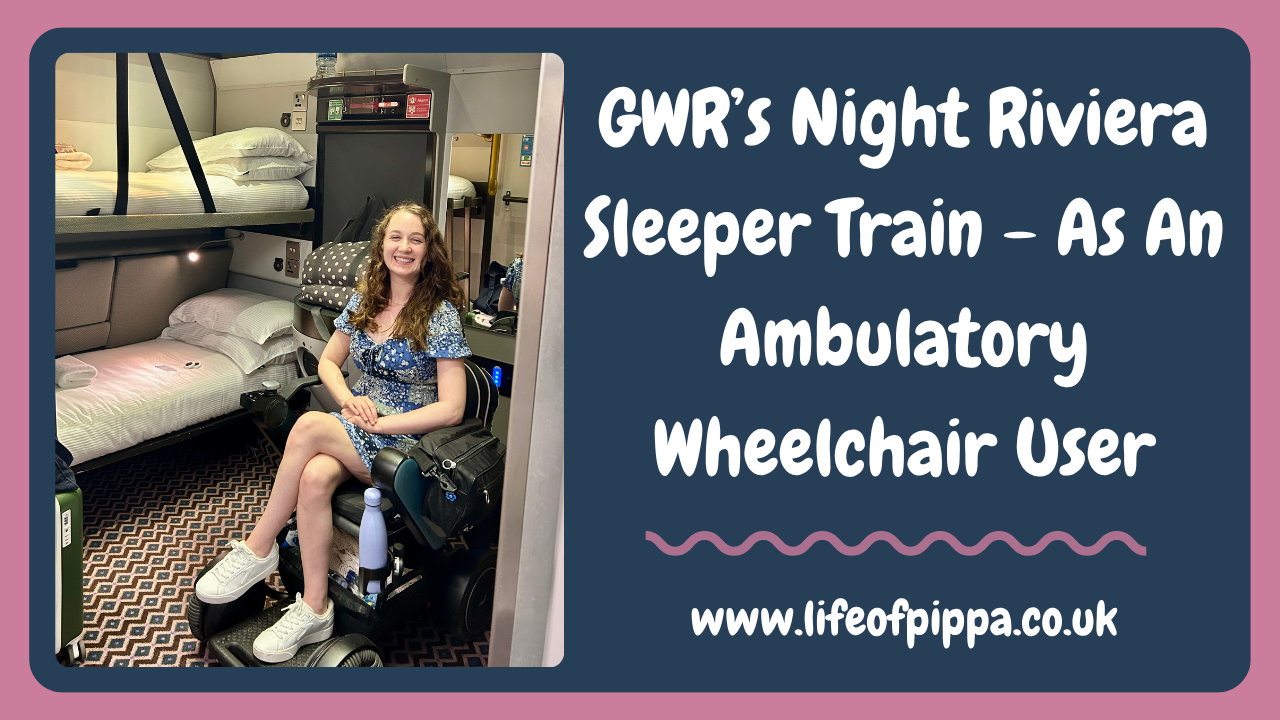
For some people, catching a sleeper train is a means to an end. They might be commuting to work, travelling to see loved ones, or maybe they just need to cover a lot of ground in as short a time as possible. For us, though, catching the sleeper train marked the beginning of an adventure, and a whole and complete travel experience in itself. My best friend Izzy and I travelled on Great Western Railway’s Night Riviera Sleeper Train in June 2026, and as an ambulatory wheelchair user, this is how I found it…
[ad] This experience was arranged for us by Great Western Railway for this Instagram content. I wasn’t planning to blog and have no obligation to blog so I don’t have many images to accompany this post, but I hope it’s helpful to read about our experience regardless!
What is the Night Riviera Sleeper Train?
Great Western’s Night Riviera service runs from London Paddington Station down to Penzance in Cornwall, with several stops along the way. You board the train in central London in the late evening, head to your seat or your cabin to settle in for the night, and disembark in Penzance (or your chosen stop) early the next morning.
In this blog post I’ll be focussing on my experience as an ambulatory wheelchair user, but you can find out more about this train, including seating/cabins options, calling points, and pricing, on Great Western’s website.
Boarding the sleeper train as a wheelchair user
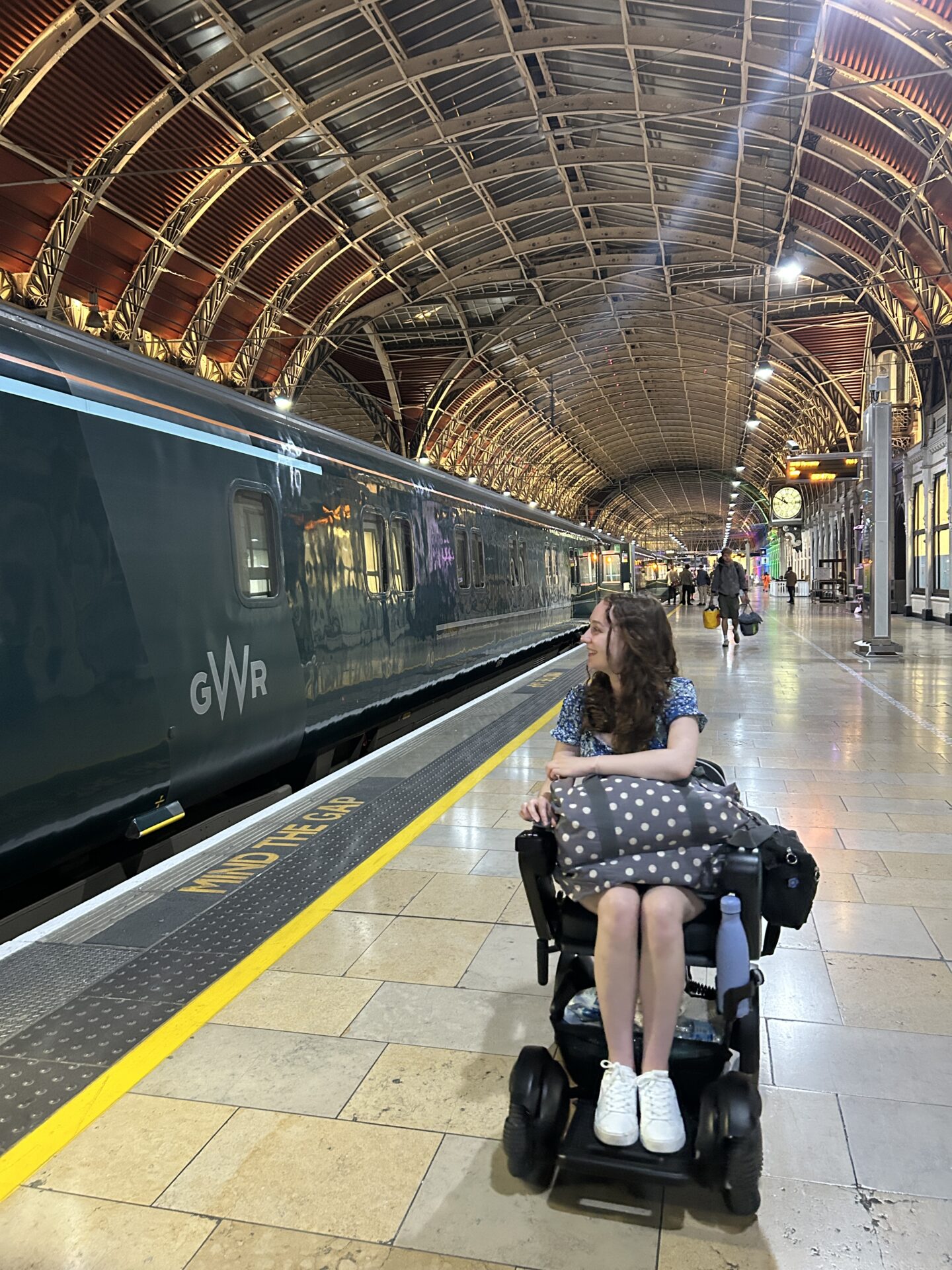
Our tickets and assistance were booked for us in advance by Great Western as part of the work we were doing for them, but if you need to book assistance, you can call the team or complete an online form using the details on their website. We booked an accessible cabin for a Sunday evening, private with bunk beds for two people, and our tickets and booking confirmation were delivered to us in advance.
On arrival at London Paddington Station, we headed to Great Western’s First Class Lounge. Night Riviera passengers are allowed to enter the lounge from 9pm onwards to enjoy complementary drinks and refreshments, and we were told somebody would collect us directly from there at around 10.30pm, when boarding began. It was slightly unclear how or whether I should check-in for the assistance I had booked, so I just let a staff member know as we entered the lounge and they took care of it from there.
When it was time to board, a staff member deployed the ramp for me to board the train carriage, in the same way that you’d board any other train as a wheelchair user. We were in Coach D and only had to pass the accessible toilet by the door before we reached our room for the night – the accessible cabin.
What is the Night Riviera accessible cabin like?
To say that we were sleeping on a moving train, the accessible cabin, though small, was more spacious than I expected. The bunk beds were against one wall and the private sink and surface area were against another, so there was more than enough room for me to manoeuvre my wheelchair and turn around. For reference, I use the Whill C2 power-chair which is about 56cm at its widest point, and there were plenty of plug sockets – including one at perfect floor height for me to charge the battery overnight. There were also alarm/assistance levers at wheelchair and standing height that would alert a staff member in case of an emergency or if you needed support. The doors are opened by a keycard (which is digitally altered after every journey) and we felt safe and secure throughout the experience.
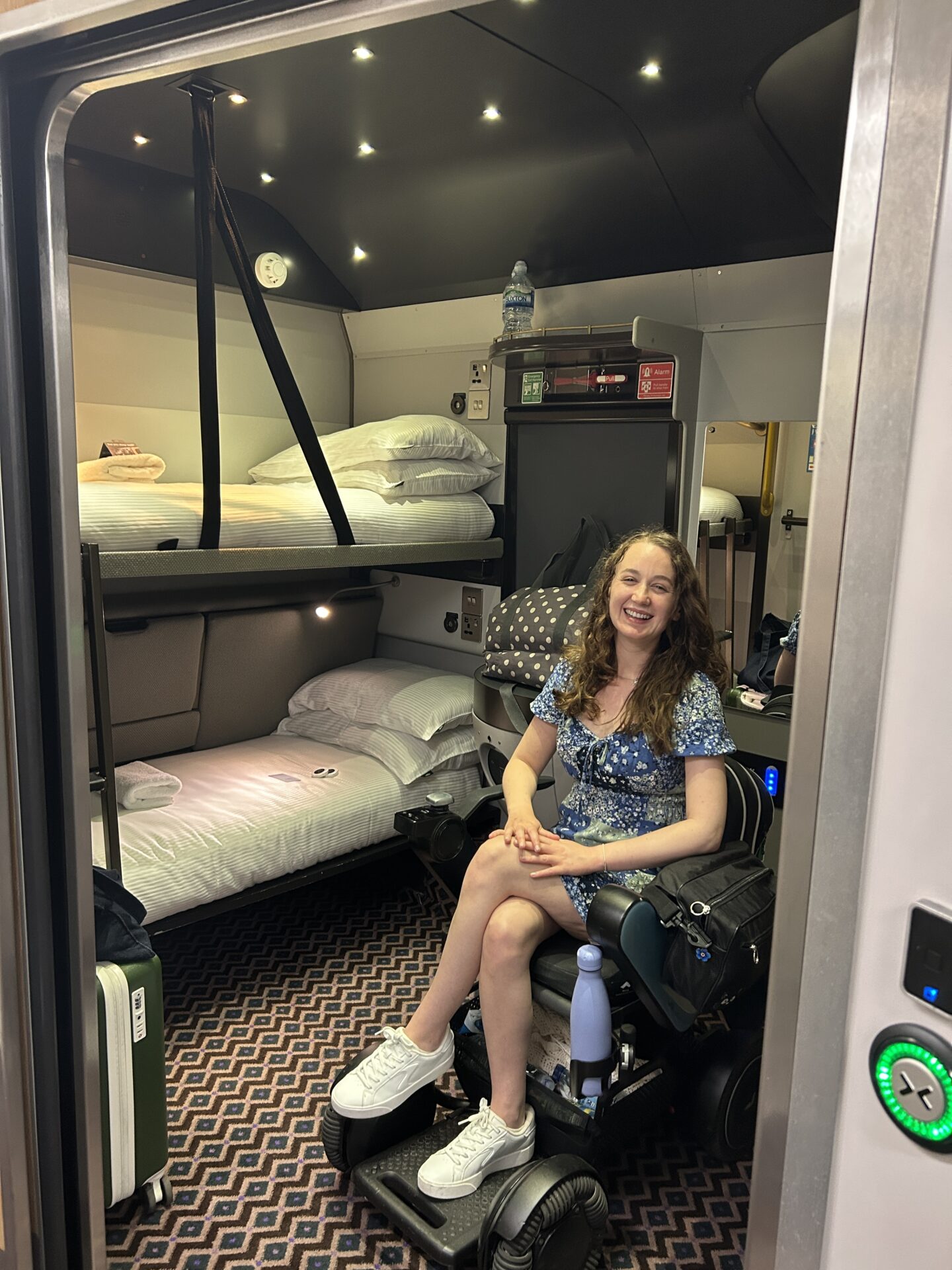
We weren’t able to glimpse the other cabins for comparison before the rest of the passengers boarded, but I believe the lower bunk in the accessible cabin is lower to the ground than the bunks in the rest of the cabins, to allow for an easier transfer. It’s worth noting that these beds are very narrow and don’t allow you much space if you’re a flip-flop sleeper like me, but they were surprisingly comfortable and cosy. Each bed has a reading light, plug socket and USB ports integrated into the headboard, and the sheets were fresh and clean.
Directly next to the accessible cabin is the accessible toilet. Again, this looks like any other accessible toilet on a typical train, with grab rails and just enough space to turn around and move about in a wheelchair. This toilet is used by all passengers bunking in that carriage, and the noise of the flush did carry into the cabin next door where we were spending the night – however, we suspected this would be the case in advance and were prepared for it.
To our left as we exited our cabin was the lounge car, where passengers throughout the train could enjoy the journey in comfortable chairs, socialise, and grab drinks and snacks from the bar. Getting into the lounge car is technically doable in a wheelchair and on a quieter service I probably could have managed it in my power-chair, but due to the number of people and their luggage in there on this occasion, we just stuck our heads in and decided not to venture any further. It’s worth noting that if you cannot access the lounge car due to a disability or mobility aids, on-board staff members can arrange room service for you.
Staff on the GWR Night Riviera
Speaking of staff, there are so many positive things I could say about our experience. Although our assistance at Paddington station was a little unclear when we first arrived, from the moment we boarded the sleeper train we were warmly welcomed and well taken care of.
Our cabin steward Paul took us through everything we needed to know before we set off – he showed us around the cabin, explained how the alarms worked, double-checked where we were disembarking, took our breakfast orders for the next morning, and asked if we wanted to book a shower slot for Penzance station when we arrived – more on this later!
As we were among the first to board, we managed to get one of the latest possible slots for our breakfast delivery (6.45am) and some of the earliest slots for showers (8am and 8.15am) the next morning too.
Quality of sleep on board the Night Riviera Sleeper Train
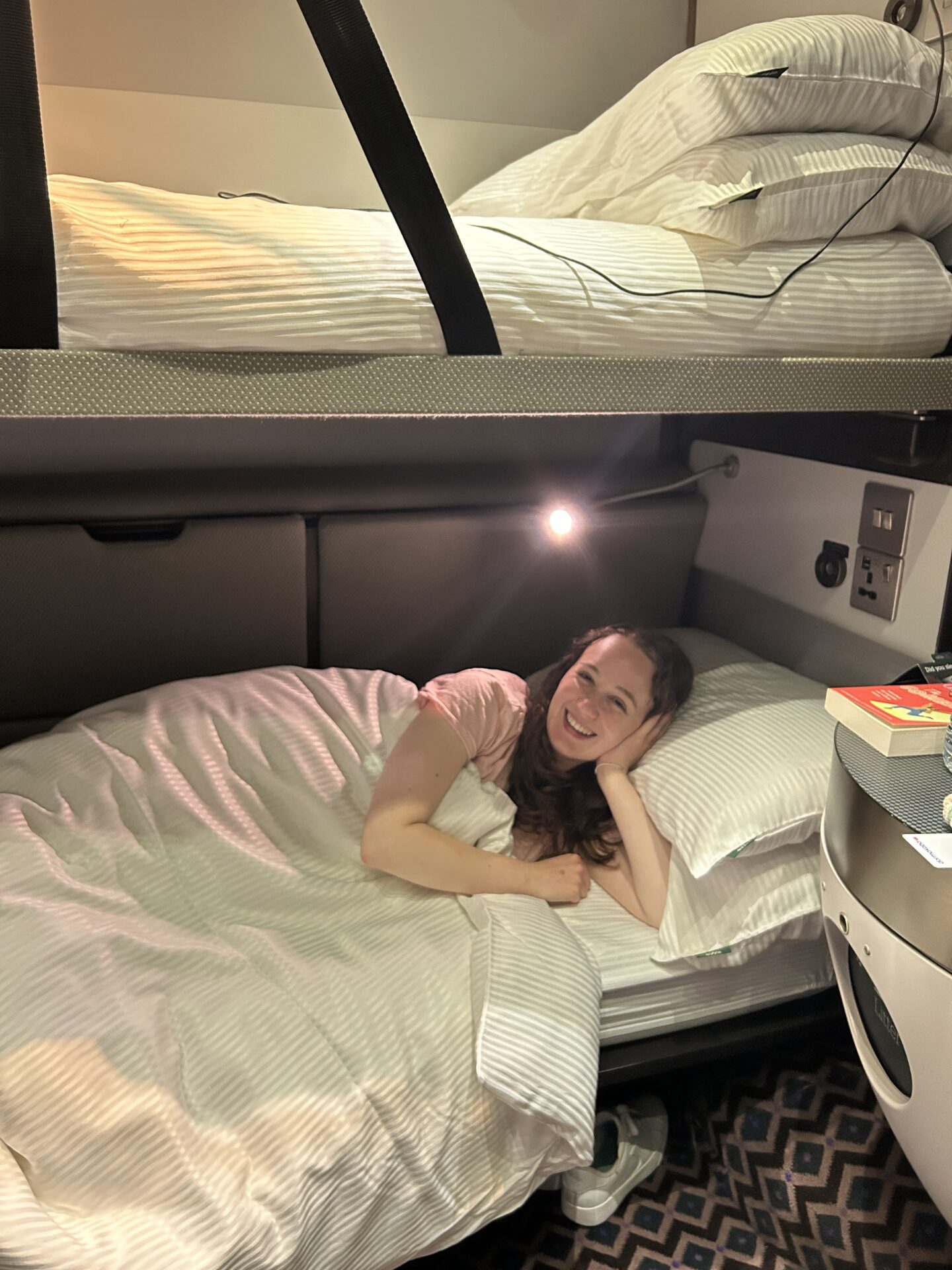
As somebody with a chronic illness, vestibular symptoms, and a raging sleep disorder chucked in for good measure, I knew from the beginning that I wasn’t going to have the best night’s sleep on board the sleeper train. I’ll share my tips and advice for how I mitigated this at the end of this blog post, but it’s worth bearing in mind that the train departs at around 11.45pm and makes several stops throughout the night, and you may have some noise disturbance from other passengers – the cabins are not particularly noise-insulated and you have the accessible toilet next door to you too.
It took me a long time to get to sleep and I woke many times throughout the night, so I believe I got about 3-4 hours of sleep in total. However, I will say that once I’d got a bit more used to the environment, I found the lower bunk bed surprisingly comfortable: even the multiple stopping and started just added to the slightly giddy feeling of knowing we were covering so much ground and getting ever closer to our destination all while we were lounging in bed. For comparison’s sake, my best friend Izzy also reported that it took a while for her to fall asleep but that she only woke up once during the night. However, I’m convinced Izzy could sleep through a zombie apocalypse if the situation called for it so I’d take that fact with a pinch of salt.
Breakfast on the Night Riviera Sleeper Train
We awoke early the next morning, to make sure we were ready for our breakfast to be delivered at the pre-arranged slot. Our beds folded away into a comfortable seating area with a fold-out table down the middle (the steward can help you with this if you’re unable to do it yourself), and we opened our blind to see beautiful countryside views out of the window as we whizzed by.
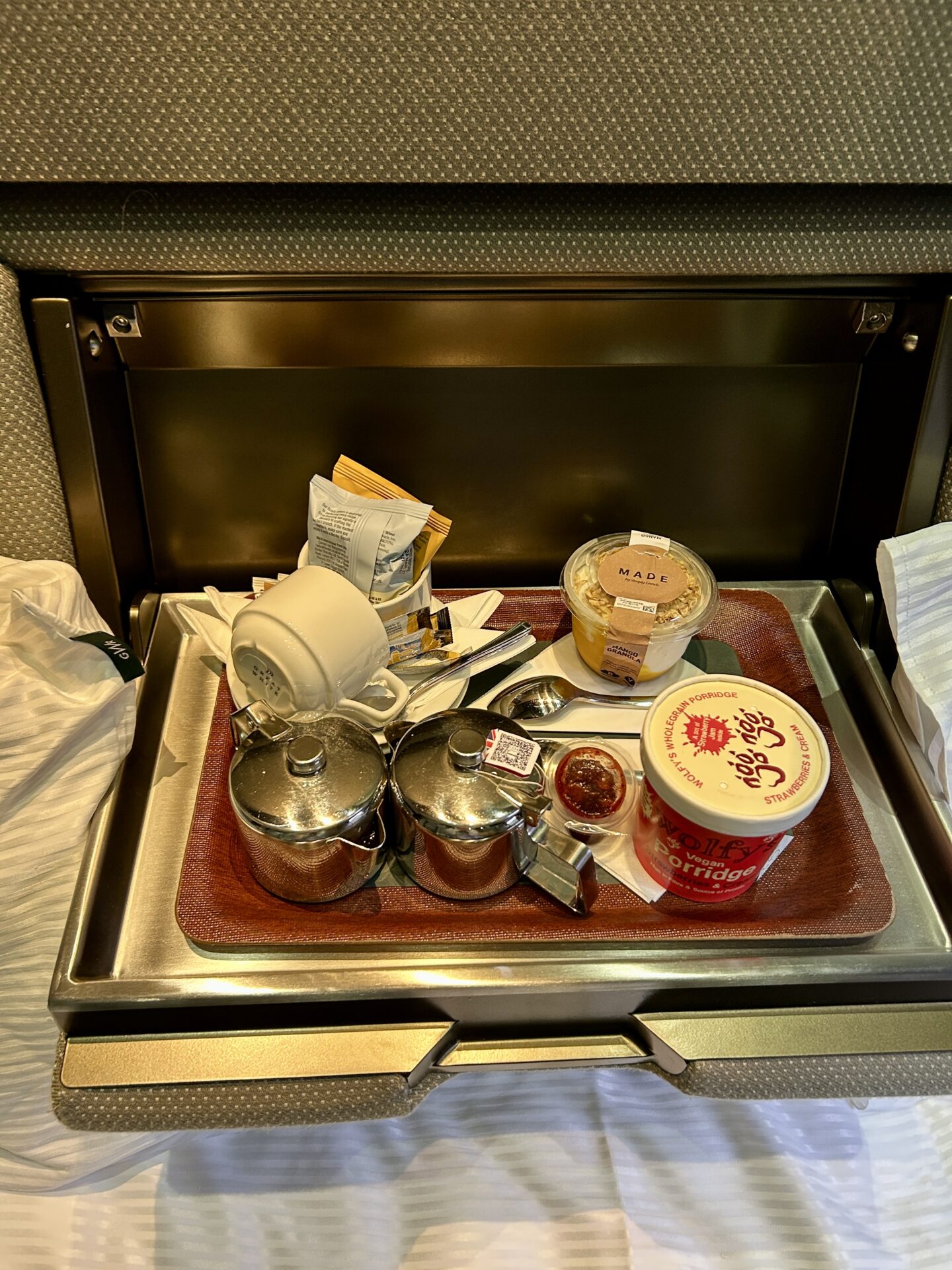
We had both placed our breakfast orders via our cabin steward the night before, and they were delivered to our room and placed on our table on a beautiful silver tray – it’s worth saying as well that stewards will always knock and wait for you to respond before they enter. We weren’t aware of the breakfast options in advance of our journey and the choices were given to us verbally once we were onboard, but to the best of my recollection they included porridge, fruit and granola, croissants, pastries or a bacon sandwich – each along with a hot drink and biscuits.
I let the steward know about my food allergies when we ordered breakfast the night before and he went away not only to check, but to bring the packaging for me to look over myself – something I always really appreciate for peace of mind. Because of this, I was able to enjoy vegan strawberries and cream-flavoured porridge with pot of tea and oat milk, while Izzy opted for a granola and fruit pot with coffee.
By the time we’d finished breakfast and our dishes had been collected, there wasn’t too long to wait before it was time to disembark. As we rolled into Penzance station we saw that staff were waiting with the ramp (which also came accompanied with a lovely chat about accessible recommendations in the area which almost had us changing our entire itinerary), and then we were directed to the GWR First Class Lounge where we’d be able to shower.
Accessible shower at Penzance Station
Before our trip we’d seen mixed information online about whether or nor there were showers available at Penzance station. However, I can confirm that these mythical showers are there, they do exist, and they can be booked by Night Riviera passengers who want to freshen up before they begin their day.
We headed into the First Class Lounge at Penzance where we could get comfortable and enjoy more complementary hot drinks and snacks while we waited for our slots. Each passenger is allocated 15 minutes to shower, and the slots are called and looked after by the friendly lounge staff. While chatting they told us that even if you had one of the later slots, it’s very likely you still won’t be waiting long: in their experience, many passengers provisionally book a shower slot while on the train but then decide not to use them when the morning comes. Izzy’s slot was on time, and as I was the only wheelchair-using passenger and there was one accessible shower, I was able to go pretty much straight in.
The accessible shower and toilet were in one spacious cubicle in a wetroom-style layout, and I was pleased to see they were fresh and clean. There was a portable shower seat and grab rails, and a curtain to pull closed around the shower area. Towels and toiletries are provided for all guests (just make sure you definitely have a towel in there when you first go in!), and it was amazing to see they also had a ReciteMe box in there to image-describe the room for travellers with visual impairments. I didn’t manage to snap photos but there are brief clips of the accessible shower at Penzance station in this Instagram Reel!
Post-showers, we both felt much more refreshed and ready to begin the day. We spent a little more time in the lounge, enjoying a hot drink while doing make-up, before picking ourselves up and embarking on a gorgeous few days exploring Cornwall.
Overall Verdict
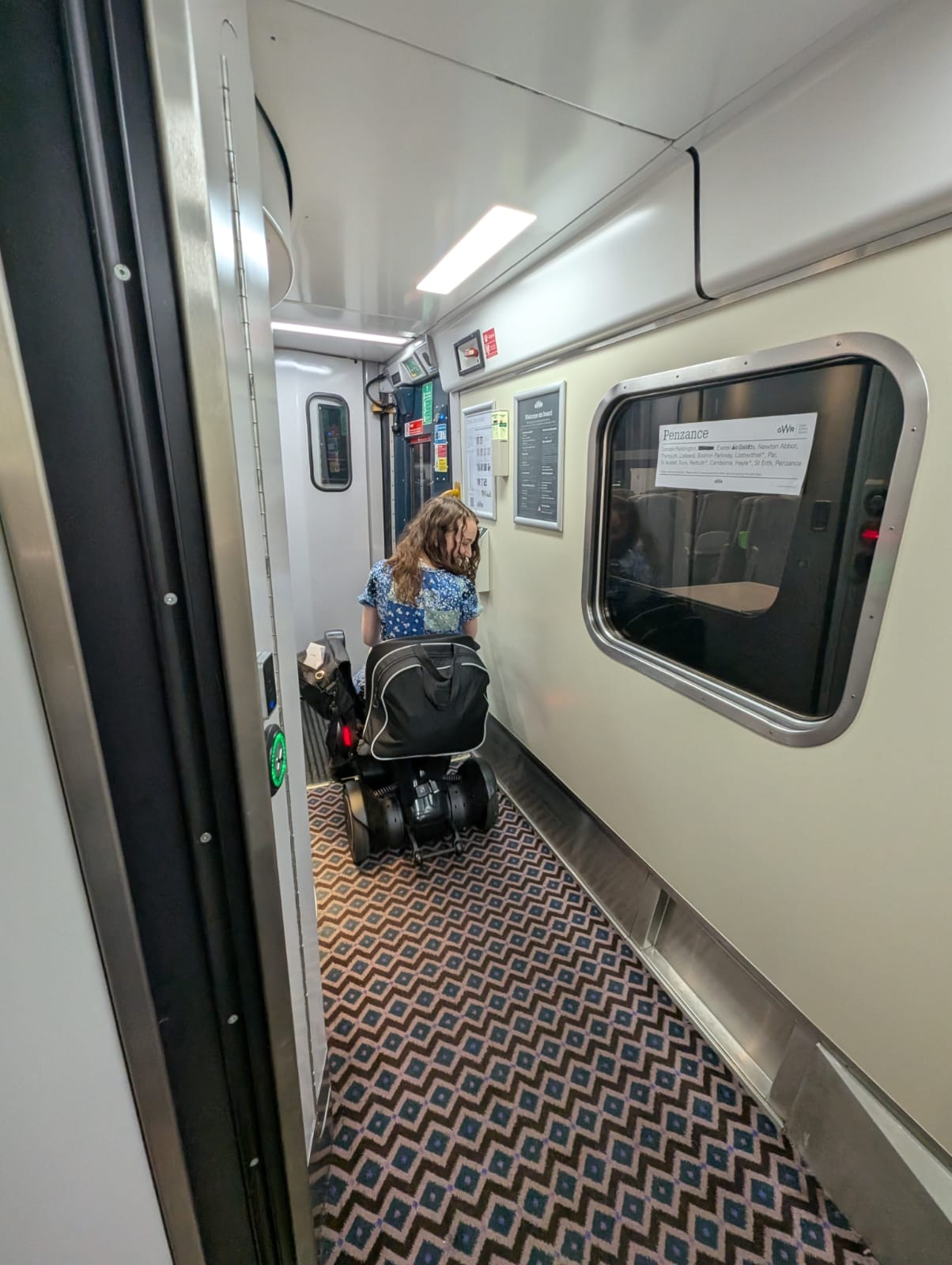
We both really enjoyed our sleeper train experience on the Night Riviera, and despite having less sleep than usual, we both agreed that we’d absolutely do it again. Our journey was fairly seamless, and knowing that we’d covered around 305 miles of the country while resting in bed and enjoying a leisurely breakfast did make us feel rather content with our choices. We did the return journey back to London on a typical, non-sleeper train a few days later for compaiand while this was also comfortable, we both agreed that in many cases, opting for the Night Riviera just makes more sense. In essence, the pros outweighed the cons for us this time.
It’s worth me saying that as a disabled person, my access needs aren’t particularly complex. If you’re somebody who requires a hoist or additional medical equipment, your experience may be different from mine. However, the calibre of the staff at all stages of our journey once onboard really makes me think they would go above and beyond to accommodate you and make your experience a great one wherever possible.
Tips for disabled and chronically ill passengers travelling by sleeper train
If you’re planning or about to embark on a sleeper train journey while managing your own access needs, here’s my advice for you…
- If you’re noise-sensitive, bring all your gear. I slept in earplugs with noise-cancelling headphones over the top, and with my eyemask on too. Combined with the silk bonnet for the curly girl curls, it was quite the fashion statement from me and I’m truly sorry you missed out on it.
- You don’t have to get on the train promptly at 10.30pm when boarding begins, but I’d advise boarding in plenty of time if you can. We were able to explore and get organised, and being among the first to speak with the cabin steward meant we got one of the latest spots for breakfast delivery – this gave us the bonus of less of an early start in the morning.
- I have vestibular symptoms that can make me a little motion sensitive. I took travel sickness medication (approved by a medical professional – always double check, especially if you’re taking other prescription medication) 30 minutes before we set off, and I also got unpacked and ready for bed before the train departed, so I wasn’t having to move around unnecessarily while the train was in motion.
- There’s room in the cabin for at least two suitcases to fit under the bottom bunk, but I think I would have struggled pulling a suitcase down the train corridor while using my power-chair. I’m sure staff would have been able to help, but in this case I opted for an overnight bag that would sit on my knee and found this worked well for me.
- I didn’t end up needing them, but I brought plenty of allergen-safe snacks and some oat milk sachets in case there wasn’t anything suitable for me on board. If you have a peanut allergy, do be aware that they serve packets of them in the lounge – another compelling reason for me to avoid the area. It would have been a real shame if our lovely Cornwall itinerary had had to begin with a cheeky visit to A&E.
- If you want to experience this but you’re fearful of travelling by train as a wheelchair user or have had bad experiences in the past, London Paddington to Penzance is an excellent route to test the waters. You can embark at Paddington knowing it could be up to an hour before you set off, and I believe the train stays at Penzance for a good while before leaving the station too, so there’s no mad rush to get on or off as there sometimes can be on a typical train service. You can take your time, familiarise yourself with the environment, and you won’t have to deal with impatient passengers jumping in your way while you’re navigating the ramp.
- I think going into this journey with the right mindset allowed me to enjoy this experience to the fullest. I knew that I probably wasn’t going to have the best sleep, and I deliberately kept our plans the following day as light and flexible as possible in case I wasn’t feeling well. I definitely wasn’t on top form after disembarking, but after a phenomenal nap in our hotel room later in the day, I was already looking back at the experience fondly.
Overall, an incredible journey that I’m so glad I got to experience for myself. Now, where to next?
Have you travelled by Sleeper Train before? I’d love to hear about in the comments here, or over on Instagram. And if you’re new, you can find more accessible travel content on the blog here, and watch my disabled travel vlogs on YouTube here. See you next time!
Where To Next?