If you’re new to the phrase ‘Energy Limiting Conditions’ and you’re looking to learn more, this blog post is for you. Below you’ll find a concise summary of what ELCs are, how the phrase came about, and why it matters – plus plenty of links to resources where you can learn more…
Before we get started, let me briefly introduce myself – I’m Pippa, and I’ve lived with an Energy Limiting Condition for around 16 years. You can find out more about me here and say hello on socials, and you can also book me as a disabled speaker. If you’re keen to learn more about this particular topic, you may be interested in my ‘What Are Energy Limiting Conditions?’ session!
Now, without further ado, let’s get into it…
What are Energy Limiting Conditions?
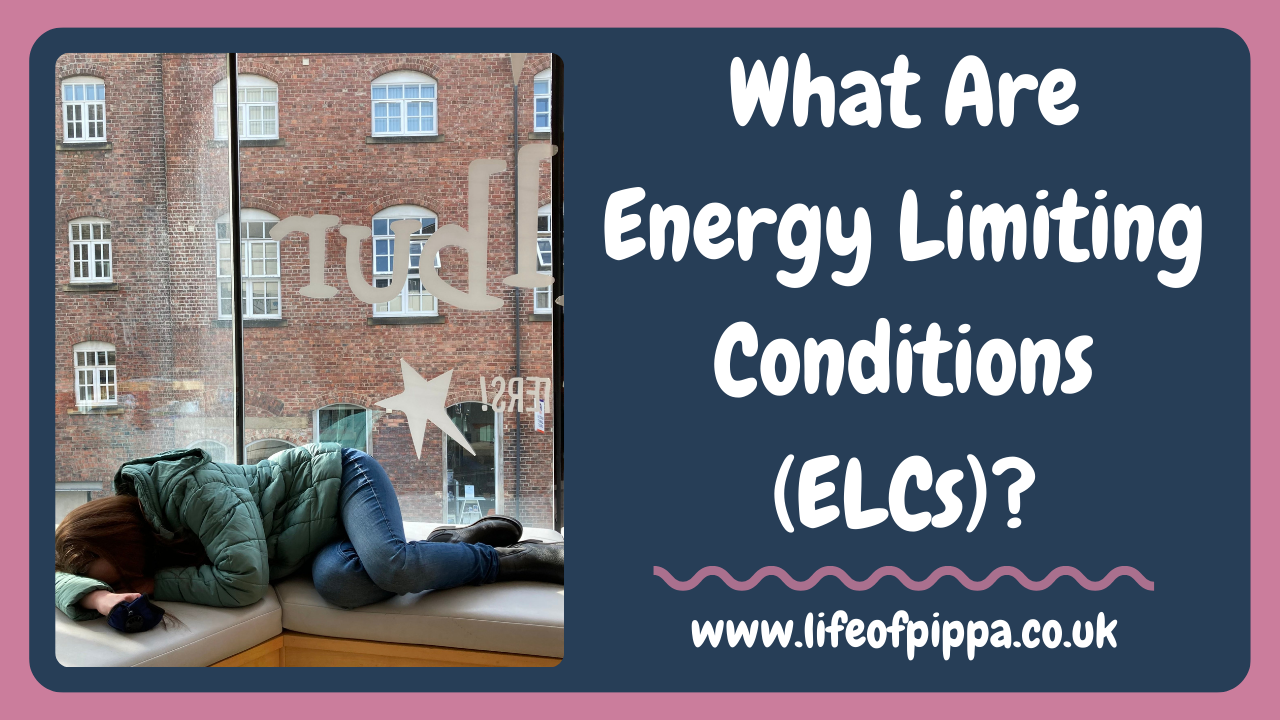
Energy Limiting Conditions, or ELCs, are a type of disability. The same way somebody might say ‘I have sight loss’ or ‘I’m neurodivergent’ or ‘I have a learning disability’ to describe their lived experience, somebody might say ‘I have an Energy Limiting Condition’ to self-identify.
People with ELCs have a significantly reduced amount of physical and mental energy that impacts their day-to-day life. We experience a level of fatigue and energy impairment that is categorically different from the everyday tiredness or lethargy that somebody without an ELC may experience, and our symptoms may severely impair our functional ability. Around one in three disabled people in the UK have an Energy Limiting Condition – everybody is affected differently, but some people have been completely housebound or bedbound for months or years at a time.
There is no definitive list of what diagnoses are or are not an Energy Limiting Condition, but common examples include ME/CFS, Fibromyalgia, Cancer, Inflammatory Bowel Diseases, Long Covid, Parkinson’s Disease and many more. All these conditions share key features in common – they come with unrelenting fatigue or energy impairment, chronic pain, cognitive dysfunction, and the experience of ‘payback’ – this refers to the fact that if we exert too much energy at once, it can take us days, weeks, or months to recover. People with ELCs also share common experiences of ableism: including isolation and loneliness, medical gaslighting, and stigma from others who don’t understand the true nature of our conditions.
How did this phrase come about?
The term ‘Energy Limiting Conditions’ was introduced by Chronic Illness Inclusion, as a result of research led by Catherine Hale. Chronic Illness Inclusion originally began as a social action project back in 2017, and in 2020 their groundbreaking ‘Energy Impairment and Disability Inclusion’ paper was released. This paper was informed by responses from over 2000 people with chronic illnesses, and sets out the evidence for considering ELCs as a cohort of disabled people with their own distinct needs.
Since then, the organisation has released several more papers and reports, and Catherine Hale continues to make an impact in the world of academia. You can keep up to date with Catherine’s work via her LinkedIn profile.
Why not just say ‘chronic illness’?
Of the conditions that could be classed as Energy Limiting Conditions, many have traditionally been thought of and referred to as chronic illness. However, the difficulty lays in the fact that in the past, chronic illness and disability were seen as two very separate realities. Many chronically ill people reported they did not feel ‘allowed’ to identify as disabled despite the disabling nature of their experiences. At the same time, some disabled people felt that the more medicalised approach adopted by the chronic illness community (such as seeking treatments for their symptoms) did not align with the more progressive social model of disability which states that people are disabled by barriers in society rather than their specific health conditions.
The term ‘energy limiting conditions’ was therefore coined as a way for people with chronic illnesses to self-identify and express our reality in a way that remains true to our lived experiences, but that better aligns with the social model of disability. It’s a label that provides chronically ill people with a sense of belonging in the disability community, and also represents both the physical and social barriers we face when navigating the world.
What changes do people with Energy Limiting Conditions wish to see in the world?
There are many ways society must evolve to become more inclusive for people with Energy Limiting Conditions. Through research and focus groups, people with ELCs have expressed a desire for further research into the causes and potential solutions for the social isolation we face, tackling the significant diagnostic delays for key conditions, more joined-up social care systems to help combat the existing bias and gaps in knowledge of GPs and healthcare professionals, the introduction of targeted support and job brokering initiatives to help people find meaningful and inclusive work (whilst emphasising that not everybody with an ELC is able to work), and increased training around ELCs and energy impairment for social security decision-makers.
The more support the movement can garner, the more interest and investment there will be in future research. In the meantime, we can all learn how to be allies and support this community, so that those of us with lived experience can pursue the most fulfilling and meaningful version of our lives.
Where can I learn more?
Thank you in advance for wanting to learn more about ELCs. I highly recommend following Catherine Hale on LinkedIn to keep up to date with her work, and the following resources may also be helpful…
- Introducing Energy Limiting Conditions: The Emergence & Evolution Of A New Impairment Concept (Research Paper)
- Chronic Illness Inclusion Website
- Energy Impairment and Disability Inclusion Paper
- Astriid’s Guide To Workplace Adjustments For ELCs
- Challenging Disbelief and Disregard: Gendered Experiences Of Healthcare For People With ELCs
And if you’d like to book a disabled speaker for your workplace or organisation, I’d love to hear from you! My ‘What Are Energy Limiting Conditions’ session is one-hour long and covers key information and research findings about ELCs, the history of the movement, personal stories and my own lived experiences of acquiring an ELC as a teenager (including how it impacts me today), and how we can all be better allies and take meaningful steps forward.
You can find out more about my speaking work (including testimonials) here, and get in touch by emailing [email protected]. Hope to hear from you soon!